
Table of Contents
- What is Reynisfjara?
- Why is Reynisfjara Popular?
- 2026 Update: Changes to Reynisfjara’s Shoreline
- What to See and Do at Reynisfjara (2026 Update)
- How to Get to Reynisfjara
- When is the Best Time to Visit Reynisfjara?
- Is Reynisfjara Beach Really Dangerous?
- How to Be Safe in Reynisfjara
- What to See and Do Around Reynisfjara
- Need a Ride?
Reynisfjara is one of Iceland’s most iconic black sand beaches, known for its striking basalt columns, powerful Atlantic waves and dramatic sea stacks just offshore. Located on the South Coast near Vík, it’s a must-stop on almost every Ring Road or South Coast itinerary.
But Reynisfjara is not a typical beach. Swimming is dangerous, conditions change quickly, and the landscape itself has recently shifted due to coastal erosion. This guide explains what to expect, what has changed, and how to visit safely.
What is Reynisfjara?
Reynisfjara lies at the foot of Reynisfjall mountain, just outside the village of Vík. The beach is named after Reynir, one of the area’s early settlers, and several nearby landmarks also carry his name.
The coastline here is shaped by volcanic activity and relentless Atlantic weather. Over time, lava flows cooled into hexagonal basalt columns, cliffs were carved by waves, and offshore rock formations were separated from the mainland.
Today, it is considered one of Iceland’s most distinctive coastal landscapes.
Why is Reynisfjara Popular?

Reynisfjara stands out for its geological features rather than its sand alone.
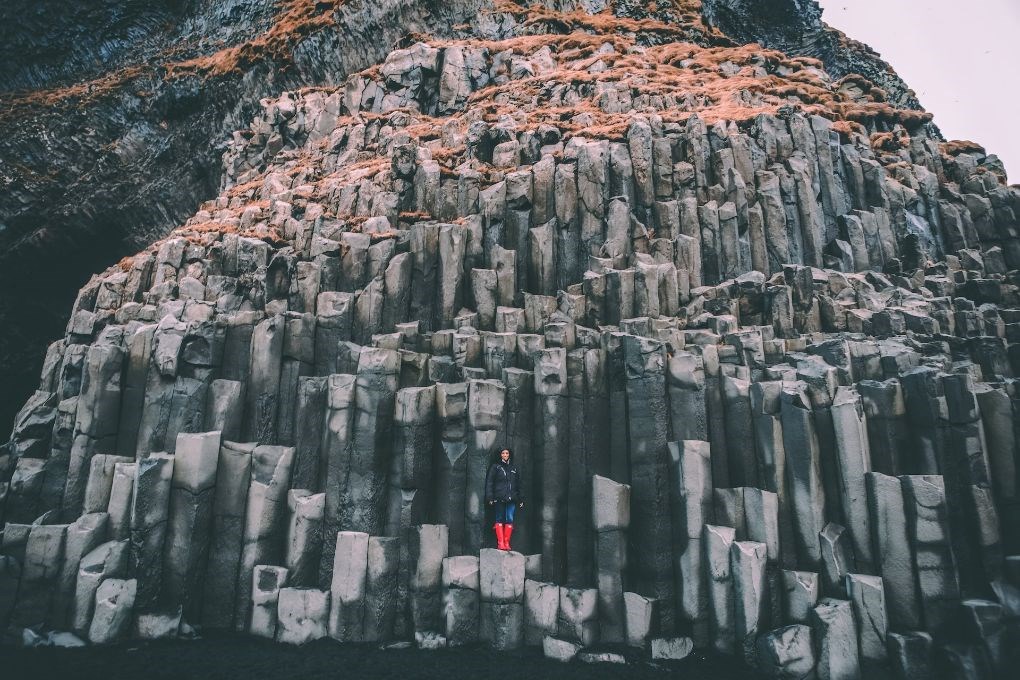
The towering basalt columns rise in near-perfect hexagonal patterns along the cliffs, forming one of the most photographed natural formations in Iceland. Offshore, the Reynisdrangar sea stacks create a dramatic silhouette against the horizon.
Icelandic folklore adds another layer of intrigue. According to legend, the sea stacks offshore are trolls who were turned to stone by the rising sun. Whether you believe the story or not, the formations are undeniably impressive.
Film fans may also recognise the beach from productions such as Game of Thrones, Noah, Star Trek: Into Darkness and Rogue One.
2026 Update: Changes to Reynisfjara’s Shoreline
In February 2026, Reynisfjara changed dramatically after a large section of the slope beneath Reynisfjall mountain collapsed. Strong winter waves then carried away a significant amount of sand, causing the shoreline to move much further inland. In some areas, the erosion reached as far back as the warning signs near the beach.
You may have seen headlines claiming that Reynisfjara has been “destroyed”. That is not accurate. The basalt columns, the cave and the Reynisdrangar sea stacks remain just as striking as ever. What has changed is the beach itself — there is now significantly less sand, and access to the shoreline is more limited.
The erosion followed an unusually long period of strong easterly winds during the winter. These winds pushed powerful waves directly onto the South Coast and shifted sand westward, disrupting the natural balance that typically replenishes the beach.
Much of the displaced sand is believed to have settled closer to Dyrhólaey. Iceland’s coastline is constantly shaped by wind and waves, so gradual rebuilding is possible — although no one can predict how long that may take.
If you are visiting, keep in mind that Reynisfjara is a living, changing landscape. It may look different from older photographs, but the cliffs, basalt formations and crashing Atlantic waves remain unforgettable.
What to See and Do at Reynisfjara (2026 Update)
Reynisfjara remains one of Iceland’s most dramatic coastal stops — but the experience in 2026 is different from previous years.
How Reynisfjara Used to Be
Until early 2026, Reynisfjara had a wide stretch of black sand between the cliffs and the ocean. Visitors could:
- Walk freely along a broad beach
- Approach the basalt columns directly from dry sand
- Stand beneath the cliffs
- Sit or stand on the lower basalt columns for photos
- Walk up to the entrance of Hálsanefshellir Cave at low tide
There was still danger from sneaker waves, but there was generally more space between visitors and the water.
The basalt columns, in particular, were easily accessible. The sand reached right up to their base, and many people would climb onto the shorter formations for pictures with the Atlantic behind them.

What It’s Like Now (2026)
After severe winter storms and prolonged easterly winds, a large amount of sand was washed away. The shoreline moved significantly inland, dramatically reshaping the beach.
Today:
- The sea reaches much closer to the cliffs
- The once-wide walking area has narrowed sharply
- In some places, dry sand has almost disappeared
- You cannot sit or stand on the lower basalt columns for photos anymore
- Waves now extend far closer to the rock formations
Instead of walking freely along open sand, visitors now experience Reynisfjara primarily from higher ground, designated viewing areas and stable sections of remaining beach.

Photo by RUV
Basalt Columns – A Major Change
The iconic basalt columns are still one of Reynisfjara’s main highlights — but their setting has changed.
Because so much sand has been removed, parts of the column wall that once stood on accessible beach now sit much closer to the Atlantic. In certain areas, the formations appear more exposed to the sea than in older photographs.
You can still clearly see and photograph the towering hexagonal rock formations. However, approaching them directly on dry sand and standing on the basalt columns from the beach are no longer feasible, and getting close to the base of the cliffs can be unsafe.
The safest way to admire the basalt columns is from designated viewing areas and stable ground, keeping a generous distance from the shoreline.
Hálsanefshellir Cave – Access Has Changed
The cave remains one of Reynisfjara’s most striking features.
Before 2026:
At low tide, visitors could often walk along the sand and stand inside the entrance of the cave.
Now:
Because the shoreline has shifted so dramatically, the cave entrance sits extremely close to the water’s edge. At most tide levels, waves reach the mouth of the cave, making direct access unreliable and potentially dangerous.
You can still view and photograph the cave façade, but entering it from the beach is no longer something visitors should expect.
Reynisdrangar Sea Stacks
The towering sea stacks just offshore are known as Reynisdrangar. These dramatic rock pillars were once part of the mainland but were gradually separated from the cliffs over centuries by relentless Atlantic waves, erosion and harsh coastal weather.
According to Icelandic folklore, Reynisdrangar are not rock at all, but trolls who were caught by the rising sun while trying to drag a ship to shore. Turned to stone in the daylight, they remain frozen in place in the sea. Whether you believe the legend or not, the stacks certainly have an otherworldly appearance — especially when waves crash around their base.
Geologically, they are made of basalt, formed by volcanic activity and later sculpted by the ocean. Like the rest of the coastline, they continue to change slowly over time. In the past, some of the stacks were connected by natural arches, but these collapsed due to ongoing erosion, reshaping their silhouette.
Today, they remain one of the most striking views on Iceland’s South Coast. From higher ground and designated viewing areas, you can clearly see their sharp, jagged outlines rising from the Atlantic.
If you bring binoculars, you may also spot seabirds nesting along the cliffs and on the stacks themselves. Puffins, fulmars and other coastal birds often use these steep rock faces as safe nesting grounds during the breeding season.
Even with the changes to the shoreline in 2026, Reynisdrangar remain untouched offshore — powerful, dramatic and unmistakably Icelandic.

Have a walk on the beach
Depending on current conditions and warning levels, you may be able to walk along parts of the remaining beach. However, access is more limited than in previous years, and visitors should keep a safe distance from the water at all times.
How to Get to Reynisfjara
The best way to get to Reynisfjara from anywhere in Iceland is via a rental car and there are a few reasons why.
It takes around 2.5 hours to drive from Reykjavík, and there is no direct public transport to the beach. While guided tours are available, renting a car allows you to travel at your own pace and explore other South Coast highlights along the way.
Staying overnight in Vík is a popular option for those exploring the region more thoroughly.

When is the Best Time to Visit Reynisfjara?
The good news is, you can easily visit Reynisfjara all year long, no matter the season or month. Plus, each season brings its own appeal.
If you visit Reynisfjara in the summer, you’ll be able to enjoy milder temperatures and spot the puffins and other wildlife along the coast and on the columns. You’ll also enjoy the dramatic scenery, with the dark waters, black sands and green cliffsides all contrasting against one another.
If you visit in the winter, though, you’ll be able to enjoy the very dramatic image of the snow and black sand contrasting against one another.
That said, no matter when you visit Reynisfjara, be sure to pay attention to the tides. Check local tide charts and visit during low tide, when the beach is safer.
Is Reynisfjara Beach Really Dangerous?
Yes — and it should be treated with respect.
The primary danger at Reynisfjara is something known as sneaker waves. These waves sneak up behind smaller waves so that you don’t realize just how big they are until they’re right up on you.
Sneaker waves at Reynisfjara are unpredictable and far more powerful than they appear. They can surge much further inland than expected, pulling people off their feet and dragging them into the freezing Atlantic within seconds.
If you’re caught in one of these waves, you could be dragged out to sea, where you could die from either drowning or hypothermia.
Rockfalls and unstable ground near the cliffs are additional hazards.
How to Be Safe in Reynisfjara
Reynisfjara has an official warning light system indicating current conditions.
Always follow the signage and never turn your back on the ocean.
Keep children close at all times and avoid low-lying areas near the waterline.

Photo credit: ferdamalastofa
The warning system at Reynisfjara
The beach uses a traffic-light system:
- Green – Conditions are relatively stable, but caution is still required
- Yellow – Increased risk; keep well back from the shoreline
- Red – Beach closed; do not approach the water
There are no lifeguards enforcing the system, so personal responsibility is essential.

What to See and Do Around Reynisfjara
Explore Vik
You can either just stop into Vik for a few hours or an afternoon, or maybe consider spending the night. Whatever you do, you’ll like this fishing village that’s filled with charming viewpoints and plenty to see. This is also a good spot to stop for lunch or a coffee, before or after you visit the beach.
Check out the views at Dyrhólaey
If you’re visiting Reynisfjara at any time of the year except for early summer, you can spend some time checking out all of the views at Dyrhólaey. During the early summer, part of the area is closed for puffin nesting. Regardless of when you visit, though, you’ll find a peninsula field with spectacular scenery.
Visit a famous plane wreck
One of the most photographed and most famous spots in southern Iceland is the Sólheimasandur plane wreck. This wrecked U.S. Navy plane is slightly creepy, set in the black sands, but is well worth a visit just for the photo op. You can climb in and around it as you explore, and it is just a quick 20-minute drive from Reynisfjara.
Take a dip in a hot springs
Iceland is filled with hot springs, from rugged springs tucked into mountain sides and only accessible via hiking, to hot springs that are fully developed and decked out with all the spa amenities you could need. For a quick hot springs dip near Reynisfjara, go to the Seljavallalaug Pool, a 20-minute drive away.
Go waterfall chasing
You can also find a selection of waterfalls nearby, between Reykjavik and Reynisfjara. Keep an eye out for Seljalandsfoss and Skogafoss and, if you like what you see, plan to visit more Iceland waterfalls during your trip.

See the glaciers
Nearby glaciers along Iceland’s South Coast are worth a visit as well, including those at Vatnajokull National Park and at the Skaftafell Nature Reserve. Iceland’s many glaciers are a part of the landscape that you just can’t miss.
Go on a road trip
Of course, as alluded, a visit to Reynisfjara fits well into many Iceland road trip itineraries.
You’ll see it if you take an extensive Ring Road road trip, as that will take you around the entirety of the country, in a circle (as the name suggests). You’ll see some of Iceland’s top spots over the course of 10–14 days.
If you have less time, you can also take a shorter, Iceland South Coast road trip, to see some of the best sites, from glaciers to waterfalls to, yes, Reynisfjara, in this part of the country.
Frequently Asked Questions About Reynisfjara
Is Reynisfjara closed in 2026?
No, Reynisfjara is not permanently closed. However, beach access is more limited due to severe erosion in early 2026. The shoreline has shifted, and visitors must follow the official warning light system. During red warnings, access to the beach area may be restricted for safety reasons.
Can you still walk on Reynisfjara beach?
In some conditions, yes — but the walking area is much smaller than before. The wide stretch of black sand that existed in previous years has narrowed significantly. Visitors should always keep a safe distance from the water and avoid low-lying areas, especially during yellow or red warning conditions.
Can you still stand on the basalt columns at Reynisfjara?
No. Due to erosion, the sand that once allowed access to the lower basalt columns has largely disappeared. Standing or climbing on the formations from the beach is no longer feasible or safe. The columns can still be clearly seen and photographed from designated viewing areas.
Can you enter Hálsanefshellir Cave?
Access to the cave entrance is now unreliable. The shoreline has moved much closer to the cliffs, and waves frequently reach the mouth of the cave. Visitors should not expect to walk inside the cave and should view it from a safe distance.
Why did Reynisfjara erode in 2026?
The erosion followed an extended period of strong easterly winds combined with powerful winter storms. These conditions pushed heavy waves directly onto the South Coast and moved large amounts of sand westward, dramatically reshaping the beach.
Is Reynisfjara dangerous?
Yes. Sneaker waves at Reynisfjara are unpredictable and powerful. They can surge much further inland than expected and pull people into the ocean within seconds. Rockfalls and unstable ground near the cliffs also present risks. Always follow the warning light system and keep a safe distance from the water.
Is Reynisfjara worth visiting in 2026?
Absolutely. While the shoreline has changed, the basalt columns, cliffs and Reynisdrangar sea stacks remain just as dramatic as ever. The experience is different from previous years, but the landscape is still one of the most striking in Iceland.
How long should you spend at Reynisfjara?
Most visitors spend between 30 minutes and 1 hour at the site. This allows time to explore the viewing areas, photograph the basalt formations and sea stacks, and take in the scenery safely.
Need a Ride?
No matter how you plan to explore Reynisfjara and the South Coast, a rental car gives you the freedom to travel safely and at your own pace.
We offer vehicles for every type of trip — from budget-friendly 2WD cars in summer to reliable 4x4 vehicles for winter conditions, as well as camper vans for road trip adventures.
With essential insurance included, 24/7 self-service pick-up and drop-off, debit card payments accepted and no young driver fees, we make exploring Iceland straightforward and flexible.
Check out your rental options and start planning your Iceland road trip today.