
Table of Contents
What Are Puffins?
Puffins are small seabirds that feature unique white and black markings, along with a yellow, orange and black beak. Puffins, due to this appearance, are sometimes called sea parrots, or “the clown of the sea.”
There are three types of puffins: tufted puffins, horned puffins and Atlantic puffins. Iceland is home to Atlantic puffins. You can also see Atlantic puffins in other countries with north Atlantic coasts; the other types of puffins are more likely to be spotted along the Pacific.
Puffins live in the nooks and crannies of cliffsides near the sea, splitting their time between the open ocean and these nesting grounds. Puffins eat plankton, fish and crabs, and can even hunt for their food beneath the water, diving below the waves to seek out their next meal.

As mentioned, Iceland is home to the largest portion of the world’s Atlantic puffin population, and, most specifically, Iceland’s Westman Islands boast the largest population overall.
It’s estimated that there are about 12–14 million puffins in the world, but the population is declining and puffins are considered “vulnerable.” Puffins often live on islands that do not house any other natural predators, but they do sometimes face threats from other sea birds, as well as from domesticated animals like cats and dogs. They also sometimes face dwindling food, dangers from fishing operations at sea and pollution.
Historically, one of the puffins’ predators was actually humans! People would catch and eat puffins, and even use their feathers in their beds. While it’s still legal to eat puffins in Iceland, most choose not to, to protect the puffins’ numbers.
When to See the Puffins in Iceland
Timing is everything.
Puffins arrive in Iceland in May and stay until late August, before heading back out to sea for the rest of the year.
If you visit between September and April, you won’t see them on land at all.
Best months:
Best time of day:
- Early morning or evening, when puffins are most active
Where to See the Puffins in Iceland
You’ll find puffins along coastal cliffs and offshore islands across the country. Some spots are incredibly easy to access, while others require a bit more adventure.
Here are the best places to see them:
The Westman Islands (Best Overall Experience)
- Why go: One of the largest puffin colonies in the world
- How to get there: 1-hour ferry from the South Coast
- Best for: Close-up sightings and a full-day trip
The Westman Islands are, hands-down, a top spot to go to see puffins in Iceland, as this archipelago is home to quite a large number of the country’s puffins. To give you an idea, Iceland is home to about 60% of the world’s total Atlantic puffins, but then the Westman Islands specifically are home to about 20% of the world’s total Atlantic puffins. That’s a lot of puffins!
There are more than a dozen islands within the Westman Islands archipelago, with the largest, inhabited island being Heimaey, where about 4,300 people live. If you want to see the puffins in the Westman Islands, you’ll go to Heimaey, where you can then see the puffins up close and personal — even on the streets or in peoples’ yards!
Reaching Heimaey requires you to take a ferry from mainland Iceland. The ferry trip takes about an hour, each way, and leaves from near Seljalandsfoss, in South Iceland. The trip is well worth it, even if it will take you an afternoon or a whole day. There are so many other things to do on Heimaey beyond just seeing the puffins. There are plenty of other bird-watching experiences to be had here, plus hiking, and boat tours.

Dyrhólaey (Best Easy Stop on The South Coast)
- Why go: Easy access and dramatic cliffs
- How to get there: Short detour off the Ring Road near Vík
- Best for: Quick stop during a road trip
Dyrhólaey is one of the easiest places to spot puffins if you’re driving along the South Coast.
They nest along the cliffs near the famous rock arch, and sightings are very common in summer—though some areas may close temporarily to protect nesting birds.

Because Atlantic puffins frequently nest here, sometimes, the nesting area is closed off to visitors if it’s deemed necessary for the puffins’ protection. However, even when the nesting area is closed, you can usually still see the puffins. Just be sure to give them their space!
While you’re in the area, be sure to fully enjoy the black sand beach and visit nearby Vík, a charming village that’s a must-stop on any South Coast road trip.
Borgarfjörður Eystri (Best Close-up Views)
- Why go: Excellent viewing platforms
- How to get there: Remote drive in East Iceland
- Best for: Safe, close, and easy viewing
This is one of the most accessible puffin colonies in Iceland. Wooden walkways bring you right to the edge of the cliffs—without disturbing the birds.
It’s a bit off the beaten path, but well worth the detour.

The Látrabjarg Cliffs (Most Dramatic Location)
- Why go: One of Europe’s largest bird cliffs
- How to get there: Remote drive in the Westfjords
- Best for: Photography and epic landscapes
The Latrabjarg Cliffs are one of the most renowned spots for puffin watching, where you can find about 40% of all the world’s puffins, in one, singular spot. The cliffs are located in the Westfjords, and the destination is popular with birders, hikers, photographers and others. However, do note that the Westfjords contain some of the rougher terrain in Iceland, so keep that in mind when getting to the cliffs and then hiking around the area.
Hornstrandir Nature Reserve (Best Remote Adventure)
- Why go: Wild, untouched nature and excellent birdlife
- How to get there: Boat access plus hiking in the Westfjords
- Best for: Adventurous travellers and serious nature lovers
Also in the Westfjords, the Hornstrandir Nature Reserve features two puffin nesting grounds, known as Hornbjarg and Hælavíkurbjarg. Do note that this nature reserve takes quite the journey, and you’ll need to be prepared for first a boat ride, and then a lot of hiking. The reserve is closed off to all motor traffic, and is completely uninhabited by people. You’ll find lots of wildlife, though. Beyond puffins, other inhabitants include the arctic fox.
Quiet, remote and completely untarnished by human development, a trip to this reserve is unlike anything you’ll ever experience.

Reykjavík (Easiest Option)
- Why go: Easy access from the capital
- How to get there: Boat tours from Reykjavík harbour
- Best for: Short stays or quick experiences
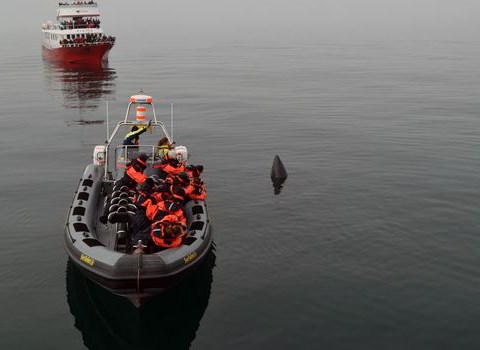
If you don’t want to venture far from the city, you can still see puffins in summer. Boat tours from Reykjavík take visitors to nearby islands such as Akurey and Lundey, where puffins nest during the season.
This is one of the easiest ways to fit puffin watching into a short Iceland trip.
Other Notable Spots
Ingólfshöfði Nature Reserve (South Coast - Guided Tours Only)
Also on the South Coast, Ingólfshöfði Nature Reserve is a popular spot for bird-watching, as the remote area near Skaftafell is home to a cliff that thousands of birds flock to, including puffins. The reserve is about a five-hour drive from Reykjavík, so consider visiting when you’re in South Iceland anyway, such as on a road trip.
Do note that you can only visit the nature reserve when you book a tour. Oraefaferdir offers puffin tours from mid-May to mid-August, during which you’ll take a tractor-drawn hay cart ride until you get to an easy hike through the nature reserve. The tour provider promises that you’ll see puffins on its tour 99% of the time.
The tour is available every day of the week except Sundays, and tour tickets are 10,000 ISK per person, or USD 71, or 66 EUR.
Tjörnes Peninsula (North Iceland)
Tjörnes Peninsula is easy to access from Húsavík, but other top spots include Raudinupur Cape, Grimsey island and Lundey island. You can also make a full birding trip out of it, when you plan a North Iceland road trip along the region’s Birding Trail.
Breiðafjörður
Breiðafjörður is a bay with many islands between the Westfjords and Snaefellsnes Peninsula. Puffins call these islands home, and you can catch a boat that will take you out to view the puffins in their habitats. You can find boats leaving from Stykkisholmur regularly.
While you’re there, be sure to check out the rest of the Snaefellsnes Peninsula, often called “Iceland in miniature,” due to how well it displays so many of the country’s versatile landscapes and features.
How to See the Puffins in Iceland
You have two options for ways to see the puffins.
Self-drive (Best for Flexibility)
Driving gives you the freedom to explore multiple puffin locations at your own pace.
Many top spots, like Dyrhólaey and Borgarfjörður Eystri, are easily accessible by road, making this the ideal option if you’re planning a road trip.
It also means:
- Fewer crowds
- More time at each location
- Better chances for photography
Join a tour (Best for Convenience)
If you prefer a simpler option, puffin tours, especially by boat, are widely available.
They’re ideal if:
- You’re based in Reykjavík
- You’re short on time
- You don’t want to drive
Puffin Watching Tips
To make the most of your experience:
- Keep your distance – puffins are friendly but should not be disturbed
- Stay quiet – avoid loud noises near nesting areas
- Watch your step – burrows can collapse if stepped on
- Bring binoculars – especially useful at cliff locations
- Dress warmly – coastal areas can be windy, even in summer
And importantly—never touch the birds or interfere with nests. It’s both harmful and illegal.

Plan Your Puffin Trip in Iceland
If you’re planning to visit several puffin spots, having your own car makes a huge difference. It gives you the freedom to explore Iceland’s coastline at your own pace without rushing or relying on tour schedules.
With Lava Car Rental, you can pick up your car straight from Keflavík Airport and start your journey right away. Whether you’re sticking to the South Coast or heading further afield, it’s an easy and flexible way to experience Iceland at your own pace.
FAQ About Puffins in Iceland
What is the best time of year to see puffins in Iceland?
The best time to see puffins in Iceland is from May to August, when they come ashore to nest. The peak period is June and July, when colonies are at their largest and sightings are almost guaranteed at popular locations.
Can you see puffins in Iceland all year round?
No, puffins are not visible on land all year. They spend most of their lives at sea and only return to Iceland during the summer months. From September to April, they are almost impossible to spot from land.
What is the best time of day to see puffins?
Puffins are most active in the early morning and late evening, when they are coming and going from the sea. These quieter times also tend to have fewer crowds, making for a better viewing experience.
Do you need a tour to see puffins in Iceland?
No, many puffin locations are accessible by car, especially along the South Coast and in East Iceland. However, tours are a great option if you prefer a guided experience or are staying in Reykjavík without a vehicle.
Are puffins easy to see in Iceland?
Yes, during the summer months, puffins are relatively easy to spot at known nesting sites. In peak season, you’ll often see them in large numbers, especially at well-known cliffs and islands.
How close can you get to puffins?
In some locations, especially where viewing platforms are built, you can get quite close. However, it’s important to keep a respectful distance and avoid disturbing the birds or their nests.