
Table of Contents
- Key Takeaways
- Is September a Good Time to Visit Iceland?
- Pros and Cons of Visiting Iceland in September
- Weather and Temperatures in Iceland in September
- Daylight Hours in Iceland in September
- Can You See the Northern Lights in Iceland in September?
- Early September vs Late September
- Where to Go in Iceland in September
- What to Do in Iceland in September
- How Many Days Do You Need in Iceland in September?
- Events in Iceland in September
- Renting a Car in Iceland in September
- What to Wear in Iceland in September
- Practical Tips for Driving in Iceland in September
- Is It Worth Visiting Iceland in September?
Key Takeaways
- September marks the transition from summer to autumn in Iceland.
- Average temperatures are generally around 6–11°C, although warmer and colder conditions are possible.
- Daylight decreases from around 14–15 hours at the beginning of September to approximately 11½ hours by the end.
- Northern lights sightings are possible throughout the month when skies are clear and aurora activity is strong.
- The Ring Road, Golden Circle and South Coast are normally accessible, but weather and road conditions should be checked daily.
- Some Highland roads may remain open in early September, but closures can happen at any time.
- A 2WD vehicle is suitable for many popular routes, while an approved 4x4 is required on F-roads.
- September is generally quieter than July and August, although accommodation and popular rental car categories should still be booked ahead.
- Travellers should keep their itineraries flexible, particularly later in the month.
Is September a Good Time to Visit Iceland?
Yes, September can be an excellent time to visit Iceland, particularly for travellers who want to combine a self-drive adventure with autumn scenery and the possibility of seeing the northern lights.
The busiest part of the summer season is beginning to ease, while most of Iceland’s main attractions and driving routes remain accessible. You can explore the Golden Circle, South Coast, Snæfellsnes Peninsula, Westfjords and Ring Road, depending on the weather and the length of your trip.
September also offers a good balance between daylight and darkness. There is still enough daylight for sightseeing and road trips, while the returning nights create better conditions for northern lights viewing.
However, September is a transition month. The weather is less predictable than in July or August, and conditions can change quickly. Travellers should plan a flexible itinerary, check the forecast regularly and avoid assuming that every summer route will remain accessible throughout the month.

Pros and Cons of Visiting Iceland in September
Before booking your trip, it is worth considering both the advantages and disadvantages of visiting Iceland in September.
| Pros |
|
| Possibility of seeing the northern lights | Aurora sightings are never guaranteed |
| Beautiful autumn colours begin to appear | Daylight decreases quickly throughout the month |
| Many hiking and outdoor activities remain available | Some seasonal tours and campsites begin reducing their services |
| Generally quieter than July and August | Weather is less predictable than during peak summer |
| Potentially better availability and price than in peak summer |
|
| Good conditions for Ring Road trips | Longer routes require more flexibility later in the month |
| Some Highland roads may still be open | Highland access is not guaranteed |
For many travellers, September offers an excellent balance between accessibility, quieter roads and seasonal experiences. The key is to remain flexible and prepare for changing conditions.
Weather and Temperatures in Iceland in September
September weather in Iceland is cool and changeable. Average temperatures generally range from around 6°C to 11°C (43°F to 52°F), although warmer and colder days are both possible.
Reykjavík and South Iceland often experience milder temperatures, while North Iceland, inland regions and higher elevations can be noticeably colder. Frost or early snowfall may occur, particularly later in the month and in mountainous areas.
A typical September day may include:
- Bright sunshine
- Cloud cover
- Light or heavy rain
- Strong winds
- Clear skies
- Colder temperatures after sunset
You may experience several of these conditions within only a few hours.
Wind is an especially important consideration when travelling around Iceland. Strong gusts can affect driving, make walking difficult and damage car doors if they are caught by the wind. Always check weather warnings before setting out and hold the doors firmly when entering or leaving your rental car.
Rain is also common, particularly in South Iceland and coastal areas. Waterproof outer layers are essential, even when the forecast looks favourable at the beginning of the day.
Daylight Hours in Iceland in September
Iceland still has plenty of daylight in September, but the days become noticeably shorter throughout the month.
Approximate daylight hours in Reykjavík are:
| Period | Approx. sunrise | Approx. sunset |
|
| Beginning of September | Around 6:00 am
|
Around 8:45 pm | Around 14–15 hours
|
| Middle of September | Around 6:45 am | Around 7:45 pm | Around 13 hours |
| End of September | Around 7:20 am | Around 7:00 pm | Around 11½ hours |
Exact times vary slightly depending on the year and your location in Iceland.
At the beginning of September, there is still plenty of time for longer sightseeing days. By the end of the month, travellers should begin their activities earlier and avoid planning long drives late in the evening.
The return of darker nights is also one of September’s biggest advantages, as it creates opportunities to see the northern lights.

Can You See the Northern Lights in Iceland in September?
Yes, it is possible to see the northern lights in Iceland in September.
Unlike June and July, September has enough darkness for the aurora to become visible again. However, sightings are never guaranteed.
Three main conditions are required:
- Sufficient solar activity
- Clear or partly clear skies
- Enough darkness
Your chances are generally better when you travel away from the lights of Reykjavík and other towns. Rural accommodation, campsites and remote driving routes can provide excellent opportunities when conditions are suitable.
For the best chance of seeing the northern lights:
- Check the cloud and aurora forecasts.
- Travel away from artificial light.
- Look for a clear view towards the north.
- Be patient, as activity may change throughout the evening.
- Dress warmly while waiting outside.
- Never stop on the road or park somewhere unsafe.
Later September offers longer periods of darkness than the beginning of the month, but the aurora can appear at any point when conditions align.
If seeing the northern lights is the main purpose of your trip, the darker months from October to March usually provide longer viewing opportunities. However, September offers the advantage of combining northern lights hunting with relatively accessible roads and many summer activities.

Early September vs Late September
The experience of visiting Iceland can differ considerably depending on when you travel during September.
| Early September |
|
| More daylight | Longer and darker nights |
| Better chance of Highland routes remaining open | Greater chance of Highland road closures |
| More seasonal tours and campsites operating | Some services begin closing or reducing hours |
| Longer days for hiking and sightseeing | Better northern lights viewing conditions |
| Conditions may feel more summery with milder temperatures |
|
| Good conditions for Ring Road trips | Longer routes require more flexibility later in the month |
Neither period guarantees a particular type of weather. A warm and calm day may be followed by heavy rain and strong winds, while colder conditions can occasionally arrive earlier than expected.
Check conditions shortly before departure and keep an alternative itinerary ready, especially if you plan to visit the Highlands or other remote regions.
Where to Go in Iceland in September
September is a good month for exploring many parts of Iceland. The best route for your trip will depend on how many days you have, your rental vehicle and the current weather and road conditions.
The Ring Road
Iceland’s Ring Road circles most of the country and passes through a wide variety of landscapes, including waterfalls, glaciers, volcanic areas, fjords and coastal villages.
Popular stops include:
- Seljalandsfoss
- Skógafoss
- Reynisfjara Black Sand Beach
- Jökulsárlón Glacier Lagoon
- The Eastfjords
- Lake Mývatn
- Dettifoss
- Akureyri
September can be an excellent time to drive the Ring Road, but conditions may differ significantly between regions. North Iceland, mountain passes and inland areas can be colder than Reykjavík or the South Coast.
We recommend allowing at least seven to ten days for the Ring Road. This gives you more flexibility if poor weather affects your plans and reduces the need for long driving days.

The Golden Circle and South Coast
The Golden Circle and South Coast are excellent choices for first-time visitors or travellers with fewer days in Iceland.
Golden Circle highlights include:
- Þingvellir National Park
- Geysir Geothermal Area
- Gullfoss Waterfall
- Kerið Volcanic Crater

Along the South Coast, you can visit:
- Seljalandsfoss
- Skógafoss
- Dyrhólaey
- Reynisfjara
- Vík
- Jökulsárlón Glacier Lagoon
- Diamond Beach
These routes are normally suitable for a 2WD vehicle in favourable conditions. However, travellers should still monitor wind, rain and road conditions each day.
The Highlands
Some Highland roads may remain open during September, particularly at the beginning of the month. However, access is never guaranteed.
Highland road opening and closing dates vary every year according to weather and road conditions. One route may remain accessible while another has already closed.
If you plan to drive in the Highlands:
- Rent a 4x4 for your chosen route.
- Check the full route before departure.
- Never drive past a road-closure sign.
- Prepare an alternative itinerary.
- Do not assume an open road is easy to drive.
- Check whether the route includes river crossings.
- Follow the rental car’s road restrictions.
A 4x4 vehicle is required on roads marked with an F. However, not every 4x4 is suitable for every Highland route, particularly those involving deep river crossings or difficult terrain.

The Westfjords
The Westfjords offer dramatic coastal scenery, remote villages, waterfalls and excellent wildlife-watching opportunities.
Popular stops include:
- Dynjandi Waterfall
- Látrabjarg Cliffs
- Rauðisandur Beach
- Ísafjörður
- Patreksfjörður
Many main routes can be driven in a 2WD vehicle during favourable conditions, but a 4x4 is recommended for greater stability and comfort on gravel roads, steep mountain passes and more remote sections.
Driving distances in the Westfjords often take longer than maps suggest. Allow extra time, keep the fuel tank topped up and check conditions before travelling between regions.

Snæfellsnes Peninsula
The Snæfellsnes Peninsula is a great option for travellers with limited time or those looking for a shorter road trip from Reykjavík.
Often called “Iceland in Miniature”, the peninsula includes:
- Kirkjufell Mountain
- Arnarstapi
- Djúpalónssandur Beach
- Búðir
- Snæfellsjökull National Park
- Fishing villages and coastal cliffs
Most popular attractions are accessible by 2WD in suitable conditions, making Snæfellsnes a flexible option for a September itinerary.

What to Do in Iceland in September
September offers plenty of activities, from northern lights hunting and hiking to cultural events and geothermal bathing.
See the Northern Lights
The return of darker nights makes September one of the first months of the season when northern lights viewing becomes possible.
You can book a guided tour or search for them independently with your rental car. If driving, always choose a safe and legal place to park and avoid stopping at the side of the road.
Go Hiking
Many of Iceland’s hiking trails remain accessible in September, especially during the first half of the month.
Popular options include:
- Reykjadalur Hot Spring Valley
- Glymur Waterfall
- Skaftafell
- Mount Esja
- Landmannalaugar, if roads remain open
- Kerlingarfjöll, if accessible
Trail conditions can become wet, muddy or slippery. Mountain weather may also change quickly, so check local conditions and make sure you have enough daylight to complete your route safely.
Never walk onto a glacier without a qualified guide.

Experience Réttir
Réttir is Iceland’s traditional annual sheep round-up. During late summer and early autumn, sheep that have roamed freely in the countryside are gathered and returned to their farms.
Dates and locations vary across Iceland. Some round-ups welcome visitors, while others are primarily working agricultural events for local farmers.
If you would like to attend:
- Check local information for dates and locations.
- Follow the instructions of organisers and farmers.
- Do not enter private land without permission.
- Avoid disrupting the animals or the work taking place.
Réttir provides a fascinating insight into Icelandic rural life and farming traditions.

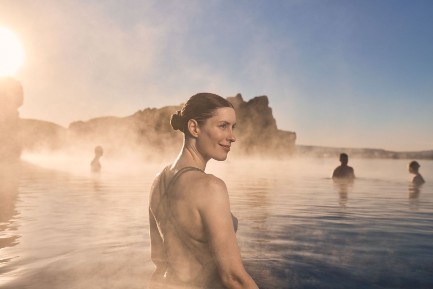
Relax in a Geothermal Pool
Cooler September weather is perfect for visiting one of Iceland’s geothermal pools, lagoons or hot springs.
Popular options include:
- Blue Lagoon
- Sky Lagoon
- Secret Lagoon
- Forest Lagoon
- Hvammsvík Hot Springs
- Local public swimming pools
If you visit a natural hot spring, respect the surrounding environment and check whether changing facilities or other services are available.

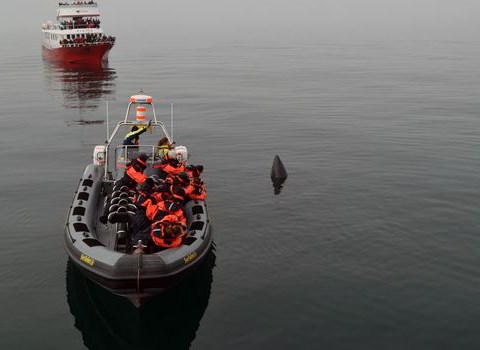
Go Whale Watching
Whale-watching tours continue to operate from locations such as Reykjavík, Húsavík and Akureyri during September.
Possible sightings include:
- Humpback whales
- Minke whales
- White-beaked dolphins
- Harbour porpoises
Sightings depend on nature and tour schedules may change as summer ends, so book ahead and check departure times.

Join a Guided Glacier Adventure
Glacier hiking, ice climbing and other glacier activities are available in September.
Popular areas include:
- Sólheimajökull
- Skaftafell
- Vatnajökull
Glaciers are constantly changing and can contain hidden crevasses. Always join a tour with a qualified guide and the correct safety equipment.

Go Berry Picking
Late summer and early autumn are good times to find Icelandic wild berries.
Common varieties include:
- Crowberries
- Bilberries
- Blueberries
Only pick small amounts for personal use, respect private land and avoid damaging Iceland’s fragile vegetation.

Travel by Campervan
September can be a good month for campervan travel, but it requires more planning than July or August.
Keep in mind that:
- Nights are colder.
- Some campsites close or reduce their services.
- Overnight stays should be at authorised campsites.
- You should confirm campsite opening dates before travelling.
- Strong winds can affect campervan driving.
A campervan gives you flexibility, but you should still plan your overnight stops rather than assuming every campsite will remain open.

How Many Days Do You Need in Iceland in September?
The ideal length of your trip depends on your route, activities and how much time you want to spend driving.
3–4 Days in Iceland
A short trip is suitable for first-time visitors who want to experience some of Iceland’s best-known attractions.
You could visit:
- Reykjavík
- The Golden Circle
- The South Coast as far as Vík
- A geothermal lagoon
- Reykjanes Peninsula
This itinerary gives you a good introduction to Iceland without requiring very long driving days.
5–7 Days in Iceland
With five to seven days, you can explore a larger area at a comfortable pace.
A typical itinerary may include:
- Golden Circle
- South Coast
- Jökulsárlón Glacier Lagoon
- Diamond Beach
- Snæfellsnes Peninsula
- Reykjavík
Alternatively, you could combine West Iceland, Snæfellsnes and a shorter South Coast journey.
8–10 Days in Iceland
Eight to ten days is generally a good amount of time for the Ring Road.
Possible highlights include:
- Golden Circle
- South Coast
- Jökulsárlón
- Eastfjords
- Lake Mývatn
- Dettifoss
- Akureyri
- North Iceland
Avoid planning too many stops each day. September weather may require you to delay a journey, shorten a route or spend an additional night in one region.
10–14 Days in Iceland
A longer trip allows you to explore Iceland at a slower pace.
You could include:
- The full Ring Road
- The Westfjords
- Snæfellsnes Peninsula
- Additional hiking days
- Remote coastal villages
- The Highlands, only if roads remain open and your rental vehicle is approved
Even with two weeks, avoid trying to include every region. A flexible and realistic itinerary will give you a more enjoyable experience.
Events in Iceland in September
Réttir
Sheep round-ups, known as réttir, take place across Iceland throughout September and are a unique opportunity to experience a traditional Icelandic farming event. Dates and locations vary around the country, so check the réttir dates and locations when planning your trip.

Night of Lights (Ljosanott)
If you’re coming to Iceland to play, not work, you might not like the idea of spending a day rounding up sheep in the fields, but what about kicking back to watch some amazing fireworks displays?
Every first weekend of September, the town of Reykjanesbær hosts the Night of Lights, filled with fireworks, light displays, art exhibits and live music.
Reykjavík International Film Festival (RIFF)
If you're visiting Iceland toward the end of the month, so you’ll miss the Night of Lights, you can still catch the Reykjavik International Film Festival. Over 11 days, there are more than a hundred film showings that take place across the city. Check out the schedule and snag tickets for the showings that interest you most.
Renting a Car in Iceland in September
A rental car is one of the best ways to explore Iceland in September.
Public transport outside Reykjavík is limited, and many natural attractions are easier to reach with your own vehicle. Driving also gives you the flexibility to adjust your itinerary if weather or road conditions change.
Should I Rent a Car in Iceland in September?
Yes, particularly if you plan to travel beyond Reykjavík.
A rental car allows you to:
- Travel at your own pace.
- Stop at attractions along the way.
- Explore areas that are difficult to reach by public transport.
- Adapt your itinerary according to the weather.
- Choose accommodation outside the main towns.
- Search for the northern lights away from artificial light.
Although September is generally quieter than July and August, popular vehicles and campervans may still sell out. Booking ahead gives you a better choice of vehicle categories.
What Type of Rental Car Do You Need in September?
| Travel plan | Recommended vehicle |
|
| Reykjavík city break | Economy 2WD | Suitable for the city and nearby paved routes |
| Golden Circle and South Coast | 2WD or compact SUV | Check wind and weather conditions |
| Ring Road | 2WD or 4x4 SUV | A 4x4 provides additional comfort in changeable conditions |
| Westfjords | 4x4 recommended | Useful on gravel roads, steep passes and remote routes |
| Highlands and F-roads | 4x4 required |
|
| Camping holiday | Campervan | Confirm campsite opening dates |
For most travellers following the Ring Road, Golden Circle or South Coast, a 2WD vehicle is normally sufficient in favourable conditions.
A 4x4 may be preferable if you want more space, greater ground clearance or additional stability, or if you plan to visit the Westfjords or other remote regions.
An approved 4x4 is required for F-roads.

What Are Road Conditions Like in Iceland in September?
Iceland’s main roads are normally accessible in September, but conditions are less predictable than during peak summer.
Possible hazards include:
- Heavy rain
- Strong winds
- Reduced visibility
- Frost
- Early snowfall
- Wet or slippery roads
- Loose gravel
- Sheep near rural roads
Main paved roads are generally well maintained, but conditions can change quickly between regions.
Highland and rural roads may be rough, narrow or uneven. Even when an F-road is officially open, it may still be challenging to drive.
Check road and weather conditions every morning and again before beginning a long or remote route. Never drive around closure barriers or ignore official warnings.
What Car Rental Protection Should You Choose?
When renting a car in Iceland, it is important to understand what protection is included, the applicable excess and any exclusions.
Lava Car Rental includes essential protection with each rental booked on the company website. Travellers can also choose Full Protection for additional peace of mind.
Full Protection includes cover for risks such as:
- Collision damage
- Theft
- Gravel damage
- Sand and ash damage
- Tyre damage
It also reduces the excess to 0 ISK for covered damage. Rental terms and exclusions still apply, so review the full conditions before booking.
What to Wear in Iceland in September
September weather can change quickly, so layering is the best approach.
We recommend packing:
- A waterproof and windproof jacket
- Waterproof trousers
- A warm fleece or wool jumper
- Thermal base layers
- Sturdy waterproof walking shoes or hiking boots
- Warm socks
- A hat, gloves and scarf
- Sunglasses
- A swimsuit
- A small day backpack
- A reusable water bottle
- A head torch or reflective accessory for later in the month
Avoid relying on a heavy jacket alone. Several lighter layers are usually more practical because you can adjust them as the weather changes.

Practical Tips for Driving in Iceland in September
Before setting off on your Iceland road trip, keep these practical tips in mind:
- Check the weather and road conditions every day.
- Choose a vehicle that matches your full itinerary.
- Keep an alternative route for any Highland plans.
- Allow extra driving time in rain, wind or on gravel roads.
- Hold car doors firmly in strong winds.
- Never stop on the road to take photographs.
- Never drive off-road.
- Reduce your speed before changing from asphalt to gravel.
- Watch for sheep near rural roads.
- Keep the fuel tank topped up in remote areas.
- Do not rely only on Google Maps for Highland routes.
- Plan to reach your destination before dark.
- Follow all road closures and official warnings.
- Keep your itinerary flexible.
- Avoid planning a long drive immediately before your return flight.
The biggest mistake travellers make in September is treating the entire month like peak summer. Early September may feel relatively mild, while the final weeks can bring much more autumnal conditions.
Is It Worth Visiting Iceland in September?
Yes, September is a rewarding month to visit Iceland.
It combines quieter roads, autumn scenery and the return of the northern lights, while most of the country’s main routes and attractions remain accessible.
However, September is more changeable than peak summer. The best road trips are built around the right vehicle, realistic driving distances and enough flexibility to respond to the weather.
Check conditions daily, prepare an alternative route for any Highland plans and avoid trying to fit too much into each day.
Whether you are planning the Golden Circle, South Coast, Ring Road or a campervan adventure, Lava Car Rental offers a range of 2WD cars, 4x4s and campervans suited to different September itineraries.
Frequently Asked Questions About Iceland in September
Is September a good time to visit Iceland?
Yes. September offers autumn scenery, fewer peak-summer crowds and the possibility of seeing the northern lights. Most main routes remain accessible, although weather conditions are more changeable than in July or August.
What is the weather like in Iceland in September?
Average temperatures generally range from around 6°C to 11°C. Rain and strong winds are possible throughout the month, while frost or early snowfall may occur in northern, inland and mountainous areas.
Can you see the northern lights in Iceland in September?
Yes. September has enough darkness for northern lights sightings, but visibility depends on cloud cover, solar activity and light pollution.
How much daylight does Iceland get in September?
Reykjavík has approximately 14–15 hours of daylight at the beginning of September and around 11½ hours by the end of the month.
Do you need a 4x4 in Iceland in September?
Not for every itinerary. A 2WD vehicle is normally suitable for Reykjavík, the Golden Circle, South Coast and Ring Road in favourable conditions.
A 4x4 is required for F-roads and may be recommended for the Westfjords, remote routes or travellers seeking additional space and comfort.
Are Iceland’s F-roads open in September?
Some F-roads may remain open, particularly during early September, but access varies by route, year and weather conditions.
Always check the full route before departure and prepare an alternative itinerary.
Can you drive the Ring Road in September?
Normally, yes. Allow at least seven to ten days, monitor weather and road conditions daily and remain prepared to adjust your route.
Is September a good month for a campervan?
Yes, but nights are cooler and some campsites begin closing or reducing their services. Confirm your planned campsites before travelling and choose a campervan suitable for your route.
Can it snow in Iceland in September?
Yes. Snow is less common in Reykjavík and coastal South Iceland, but it can occur in northern, inland and mountainous regions, particularly later in the month.
Is Iceland crowded in September?
September is generally quieter than July and August. However, popular attractions can still be busy, and certain accommodation or rental car categories may sell out.